
Transaction Monitoring
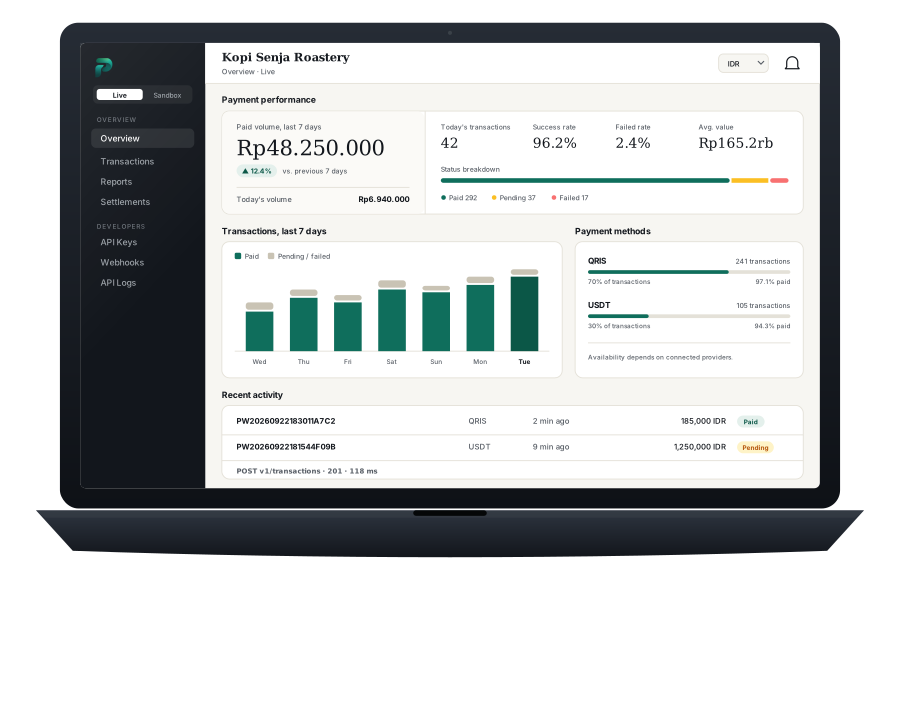
Follow every transaction from creation to its final status, filter by method, status, and environment, and export what you see.
API-first payment transaction infrastructure
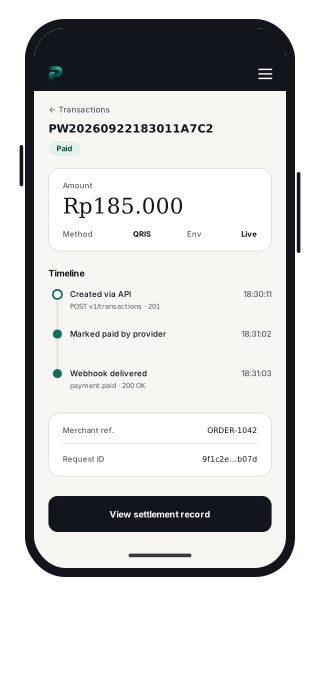
PAYWISE gives engineering and operations teams a single source of truth for QRIS and USDT transactions — from the API request that creates them to the webhook that confirms them and the settlement record that closes them out.
How it works
Creates a transaction with a scoped API key and your own order reference.
Validates, de-duplicates, and records it — then tracks its status through the connected provider.
Receive signed webhooks on every status change and work from the same record in the dashboard.
API integration
Two endpoints cover the transaction lifecycle: create and retrieve. Every response uses the same envelope and carries an X-Request-Id you can trace in your API logs.
// create a transaction (sandbox key)
POST /api/v1/transactions
Authorization: Bearer pw_test_•••••••••
Content-Type: application/json
{
    "merchant_reference": "ORDER-1042",
    "amount": 250000,
    "payment_method": "QRIS"
}
// response · 201 · X-Request-Id: 9f1c…
{
    "success": true,
    "data": {
        "reference": "PW20260921143022AB3F",
        "status": "pending",
        "environment": "sandbox"
    }
}
Operations
Follow every transaction from creation to its final status, filter by method, status, and environment, and export what you see.
Status changes are delivered to your endpoint with an HMAC signature. Every attempt is logged with its real response code.
Every paid transaction records its gross, the fixed 3% fee and its net amount. Merchants can withdraw any part of their net amount; each payout is tracked through to completion.
Read-only signals flag failure-rate spikes, webhook delivery problems, stale pending transactions, and inactive merchants.
Developer experience
Everything needed to go from first key to production lives inside the dashboard.
Send real requests with a sandbox key without writing any code.
Method, endpoint, status, latency, and request ID for every call made with your keys.
Endpoint reference, error codes, and webhook payloads next to your keys.
Copy-ready examples in cURL, PHP, and Node.js.
Security
API keys are hashed at rest and scoped per merchant and environment — the full key is shown once, at creation.
Each delivery carries an HMAC-SHA256 signature so your endpoint can verify it came from PAYWISE.
Merchant owners, staff, sales partners, and administrators each see only what their role allows.
API requests, webhook attempts, and administrative actions are recorded, not left to memory.
PAYWISE is
PAYWISE is not
Create an account, generate a sandbox key, and send your first transaction from the playground in minutes.